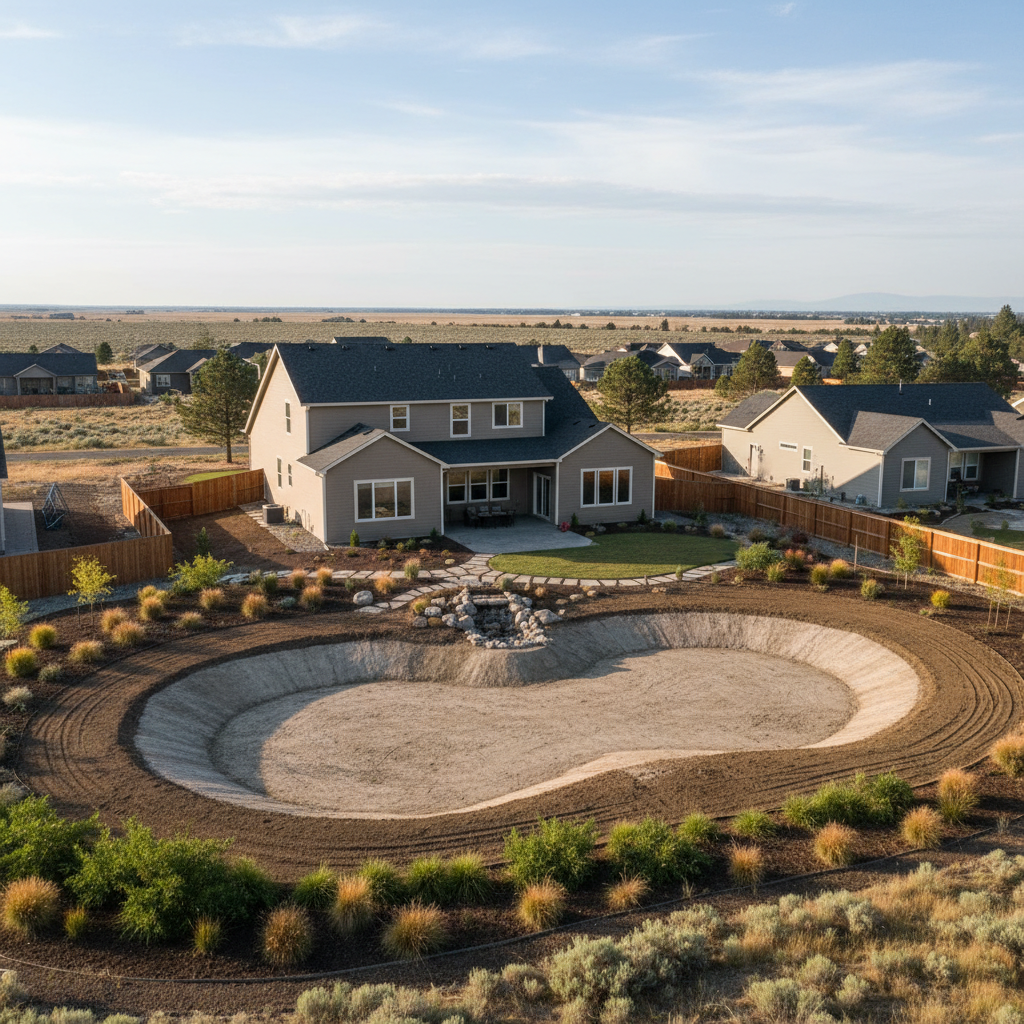
So, you're dreaming of a pond on your property here in Moses Lake. Maybe it's for irrigation, maybe it's for livestock, or maybe you just want a beautiful water feature to relax by. Whatever the reason, digging a pond isn't like planting a flowerbed. There's a lot more to it, especially with our unique local conditions.
Why Local Expertise Matters for Pond Digging
You might think a hole is a hole, right? Not really, not when you're talking about something that needs to hold water and last for years. Here in Moses Lake, we've got some specific challenges and opportunities. For starters, our soil can be tricky. Depending on where you are – whether it's out near the orchards or closer to the lake in some of the older residential areas – you could be dealing with anything from sandy loam that drains like a sieve to heavy clay that's perfect for holding water, or even caliche layers that are a real pain to break through. Knowing what you're up against before the first shovel hits the dirt is huge.
Then there's the water table. It fluctuates, and understanding its behavior is critical for a successful pond. You don't want to dig a beautiful pond only to have it dry up in the summer or overflow constantly in the spring. A local contractor, someone who's been moving dirt around here for years, knows these patterns. We've seen what works and what doesn't.
Common Pond Projects I See Around Here
I've dug all sorts of ponds for folks around Moses Lake. Some people want small, decorative ponds for their backyard landscaping, often in new developments like those popping up near the golf course. These usually need careful planning for liners and filtration systems to keep them clean and clear.
Then there are the bigger projects. Farmers and ranchers often need irrigation ponds or stock ponds. These are utilitarian, designed for volume and efficiency. For these, it's all about maximizing water retention and often involves significant earthmoving to create the right slopes and depths. We've also helped property owners create wildlife ponds, designed to attract local birds and other critters, which often means shallower edges and specific plant zones.
Planning Your Pond: More Than Just a Hole
Before any dirt gets moved, you've got to do your homework. First, permits. Don't skip this. Depending on the size and location of your pond, you might need permits from the county, the Department of Ecology, or even the Department of Fish and Wildlife. It's a hassle, but it's a necessary one. We can help you navigate that process or at least point you in the right direction.
Next, consider your water source. Are you relying on groundwater, runoff, or will you be pumping water in? This will dictate the design and size of your pond. And what about drainage? Where will overflow go? You can't just let it run onto your neighbor's property.
Finally, think about the long-term. How will you maintain it? Will it need a liner? What kind of ecosystem do you want to create? These are all questions that impact the excavation process itself.
The Excavation Process: What to Expect
Once we've got the plan and the permits, it's time to get to work. This usually starts with site preparation – clearing any brush, trees, or debris. Then, we mark out the exact dimensions and depths. This is where the right equipment makes all the difference. You need excavators that can handle our local soils, whether it's cutting through hardpan or shaping delicate slopes.
We'll dig the pond to the specified depth and shape, paying close attention to the slopes of the banks to prevent erosion and ensure stability. The material we dig out, that's called spoil. We can either haul it away, or if you've got a use for it on your property – maybe for grading, building up an area, or creating berms – we can move it for you. It's all about being efficient and making the most of the resources on site.
After the main digging is done, there's usually some fine-tuning. This might involve compacting the bottom and sides, installing any necessary liners, or creating features like spillways or inlets. It's a detailed process, and getting it right the first time prevents costly repairs down the line.
If you're thinking about a pond project, give us a call at Moses Lake Excavating. We're happy to come out, take a look at your property, and talk through your ideas. We've got the experience and the equipment to make your pond a reality, built right for Moses Lake conditions.