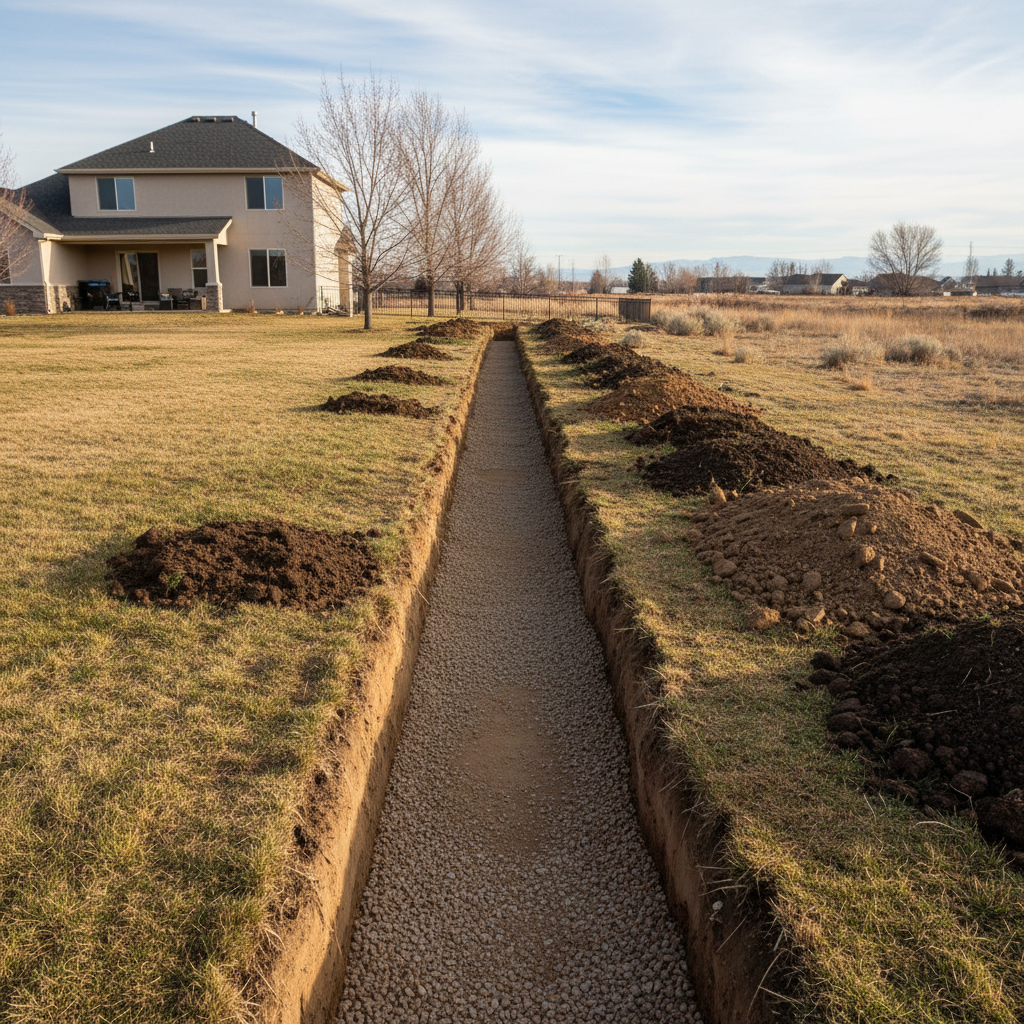
You've got trenches on your property, whether it's for water lines, sewer, drainage, or electrical. Maybe I put them in for you, or maybe another crew did years ago. Either way, once that dirt's back over them, it's easy to forget they're even there. But ignoring them can lead to some real headaches and expensive fixes down the road.
I'm talking about protecting your investment and making sure those underground systems last as long as they possibly can. We deal with some pretty specific conditions here in Moses Lake, from our hot, dry summers to the freezing winters and that clay-like soil in some areas that can really hold water. So, let's talk about what you need to do to keep things running smoothly.
Extending the Life of Your Trenches
The best way to make sure your trench work lasts is to get it right the first time. But assuming it was done correctly – proper depth, good backfill, adequate compaction – your ongoing efforts are key. For drainage trenches, especially, keeping them clear of debris is huge. Think about the runoff from your roof or driveway. If it's carrying leaves, dirt, or gravel into a swale or French drain, that stuff will eventually clog things up. Regular cleaning of grates and surface inlets is a must. For utility trenches, the main goal is to prevent ground movement or external damage.
One thing I always tell folks around here, especially if you're out in the more rural parts of Grant County with septic systems, is to know where your lines are. Get a copy of your as-built drawings if you can. If you don't have them, consider having a professional locate them. Knowing where not to dig or plant trees is half the battle. Tree roots are notorious for finding their way into water and sewer lines, especially if there's even a tiny crack. We've seen it happen countless times in older neighborhoods where big shade trees were planted right over utility easements.
Regular Maintenance: What You Can Do
For most utility trenches, 'maintenance' isn't really about actively doing something to the pipe itself, it's about maintaining the ground above it. Keep an eye on the surface. Is the ground settling? Is there a depression forming? That can indicate an issue below, like a pipe leak washing away soil, or just poor compaction during the original backfill. If it's just minor settling, you can add some topsoil and reseed. But if it keeps happening, that's a red flag.
For drainage trenches, especially French drains or curtain drains, you'll want to check them seasonally. After a heavy rain, go out and see how they're performing. Is water pooling where it shouldn't? Is the outlet flowing freely? Clear away any leaves, grass clippings, or silt that's accumulated in the rock or gravel. Sometimes, if you have a cleanout access, you can even flush them with a garden hose to clear minor blockages. It's not a fun job, but it beats a flooded basement.
Warning Signs of Problems
You don't need to be an expert to spot trouble. Here are some things to watch out for:
- Wet spots or unusually lush grass: If you've got a patch of grass that's always greener or wetter than the surrounding area, especially when it hasn't rained, that's a classic sign of a leaking water line.
- Foul odors: A persistent sewage smell, particularly near where your sewer line runs, means you've got a break or a blockage. Don't ignore this.
- Sinkholes or depressions: Any sudden dip or hole in the ground above a trench is a serious concern. It could mean a significant leak or collapse.
- Slow drains or backups: Inside your house, if multiple drains are slow, or you're getting sewage backing up, your main sewer line is likely blocked or damaged.
- Erosion: If you see the ground around your drainage trenches eroding away, or the gravel in a French drain is disappearing, it means it's not handling the water flow correctly, or the fabric liner has failed.
When to Call a Professional
Look, I'm all for DIY, but some things are just best left to the pros. If you see any of those warning signs I just mentioned, especially the wet spots, sinkholes, or sewage smells, it's time to call someone. Don't try to dig down yourself unless you know exactly what you're doing and you've called 811 to get utilities marked. Hitting a buried power line or gas line is no joke.
You should also call us or another experienced excavator if:
- You suspect a major pipe break or collapse.
- Your drainage system isn't working at all, and simple clearing doesn't fix it.
- You need to locate buried lines accurately.
- You're planning any major landscaping or construction that might impact existing trenches.
At Moses Lake Excavating, we've got the equipment and the know-how to diagnose and fix trench issues without making a bigger mess. We understand the local soil conditions – that hardpan layer we often hit, or the sandy spots – and how they affect underground infrastructure. We'd rather you call us for a check-up than for an emergency repair after things have gone completely sideways. A little vigilance now can save you a lot of money and stress later.